‘I Never Tell Anybody That The Music Is Meditative’: Arooj Aftab On Genre, Exotification & Her Bonobo Collaboration

12 August 2026
I know I am close to offending Arooj Aftab into disinterest. I have sidelined the bulk of the influences that go into her sound and, for three questions straight, have focused on investigating where and when the NYC-based Pakistani-American artist chose to draw on classical music.
“I wouldn't say that it's classical music. You can tell that I'm from a South Asian region when you listen to my music,” she corrects me, not for the first time but now more firmly. “But you can't really say, 'oh it sounds like she's classically trained.' It definitely doesn't sound like that.”
I am not the first music writer to hear Hindustani classical sounds in her work. Whether branded neo-sufi or through allusions to ragas, Arooj is frequently, if not near-constantly, associated with traditional styles or their adjacent forms – from her first record, 2014’s ‘Bird Under Water’, to her latest, ‘Night Reign’, released a decade later. Not without reason.
In the very first minute of the first track off her first album, Arooj’s discography begins with the kind of melodic interpolation over a single repeated word, “Maula” (the word for divine), most associated with khayal singing before breaking into the rest of the sufi poem ‘Mann Kunto Maula’, later going on to tackle the popular thumri ‘Aey Na Balam’. Even her breakout track ‘Mohabbat’ (which made Arooj the first Pakistani to win a Grammy and was publicly favourited by Barack Obama) from 2021’s ‘Vulture Prince’ is a ghazal popularised by the likes of Mehdi Hassan and Farida Khanum.
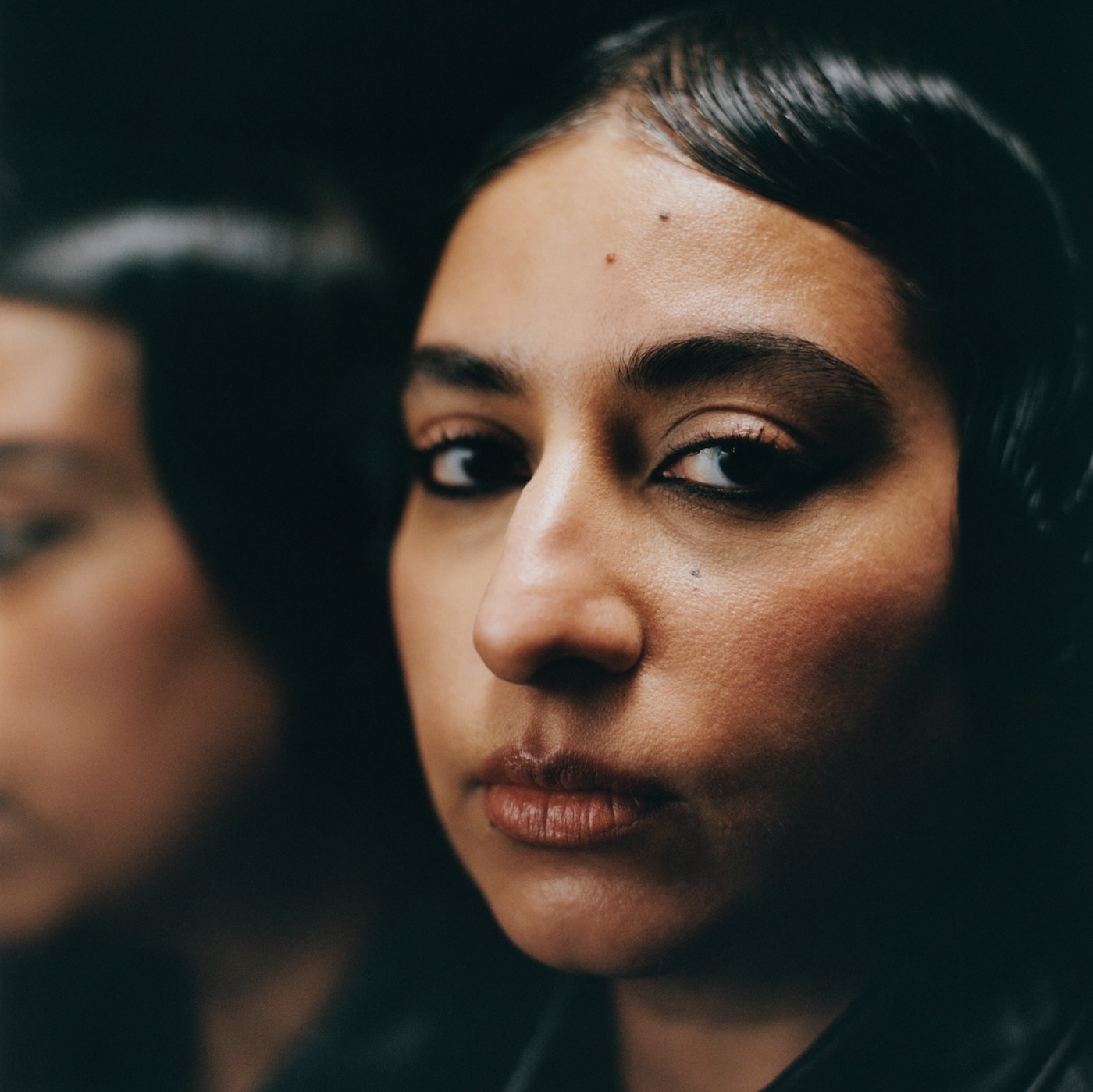 Arooj Aftab | Credit: Josefina Santos
 Arooj Aftab | Credit: Josefina Santos
There is no dearth of people combining jazz with contemporary electronica or even with Hindustani classical music. While it is easy to see how the former two styles seep into the expression of this Berklee-trained polymath who has worked as a producer on film and video games, it is the addition of that third language that separates Arooj from the rest of the jazz-with-something canon. More precisely, her ability to shed some of the weighty layers and technical density without losing the emotional core. The elaborate melodic flights of jazz or Hindustani classical singing become, in her hands, phrases that can be casually sung alongside the work of the most popular singer-songwriters.
“We're still very genre-oriented and want to pin it down,” she says. “People really, journalists mostly – and especially when you are introducing a new style of music – they want you to figure out some way to define it so people can understand.”
She recalls the early days, around the release of her 2014 debut album, when people reacted to the music with curiosity. She had to participate in how people talked about her music, the language around it and how it was framed. But more than a decade later, things are different. Her audience now stretches across the world, with listeners from South Asia, North America and places far beyond receiving her music with a similar mixture of familiarity and surprise – familiarity with the sounds they grew up with, and surprise at the ones they did not expect to hear beside them. “It really draws them in, as if they've heard this before, but they'll also be drawn in, in a way that they're a little surprised and a little intrigued. Because there are parts of it that they have not. And that is really exciting. That combination!”
Her protest at having her multifaceted sound reduced to its traditional South Asian influences isn’t unfounded. “I've always been someone who crosses the genres, you know? It is just as much American as it is Pakistani or as it is South Asian,” she continues. “It's all very rooted in my personal journey.” If there is ghazal or thumri in her discography, then so are jazz standards (like her rendition of ‘Autumn Leaves’ on 2024’s ‘Night Reign’). There is an entire modular synths-led ambient-experimental album in her discography: 2018’s ‘Siren Islands’. Yet these aren't necessarily the elements through which Arooj has come to be recognised on the global stage.
“The exotification of South Asian music comes in so many forms, but I don't think my music really allows for it,” she says, citing and amusingly demonstrating some of the easier targets: ragas being warbled over dance tracks played at European raves, Buddha Bar music, or the kind you’d find in a stereotypical Boston yoga studio. “It by itself rejects that and asks for something – asks to be taken seriously and asks to be a part of modern music without these tropes.”
She doesn’t outright reject the presence of the sounds rooted deep in her culture; rather, she doesn’t see them as anything too distinct to be given more attention than any of the other musical influences.
Growing up in a music-loving family, first in Riyadh, Saudi Arabia, and later in Lahore, Pakistan, Bade Ghulam Ali Khan, Nusrat Fateh Ali Khan and Abida Parveen were just as much part of her musical upbringing as Billie Holiday and Mariah Carey. Not in the sense of formal music training, but as records always playing in family gatherings with friends or without. “I grew up with that just like as if it was the curtains in the house”, she explains, recalling memories such as that of her parents being obsessed with Jagjit Singh and Chitra for a phase. “I never really had consciousness of: right now I’m doing jazz, and right now I’m doing South Asian. The identity of both was always very intertwined. It wasn’t very divisive in my brain.”
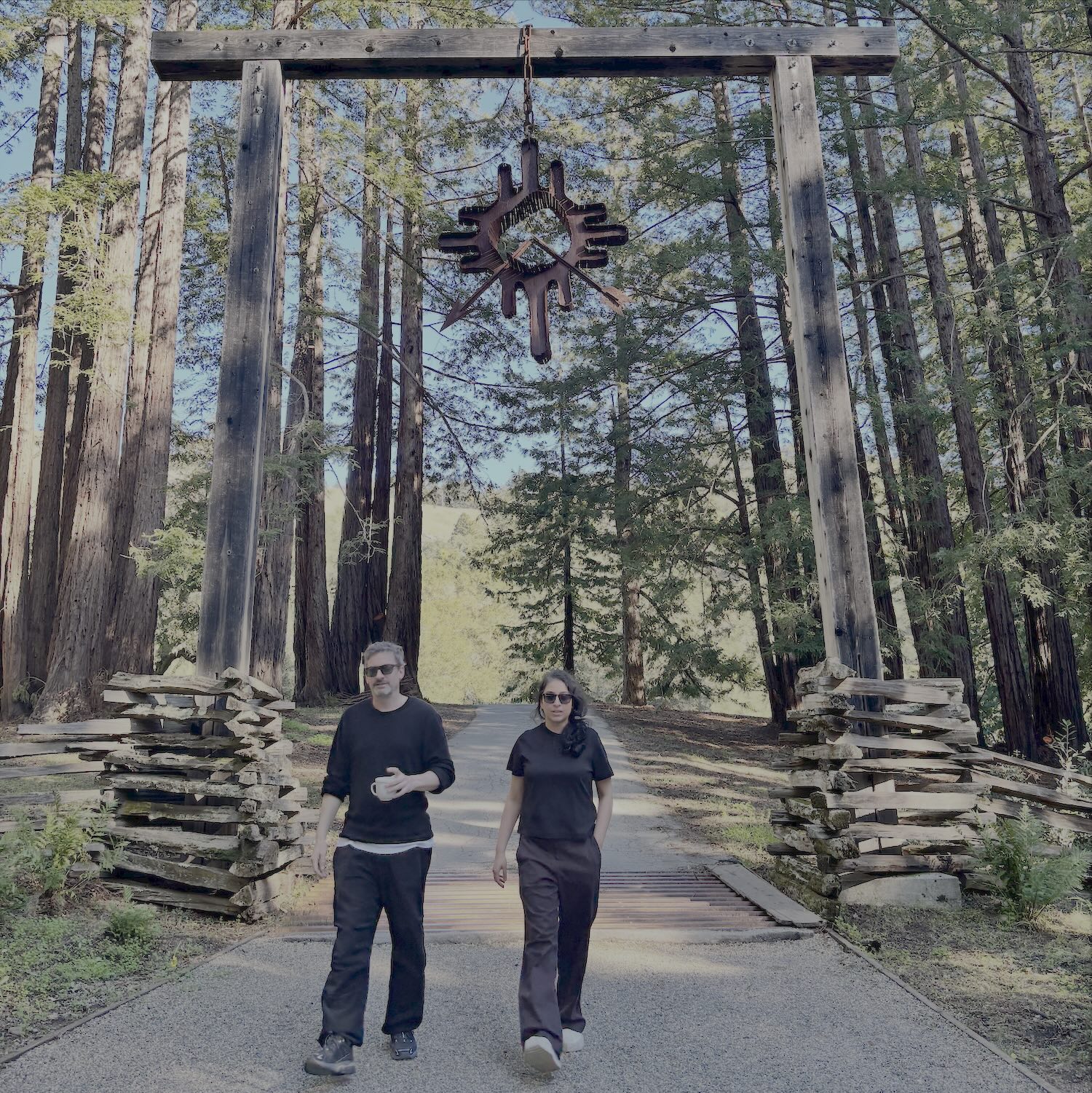
Bonobo (left) and Arooj Aftab walk on one of the trails at the Broken Arrow Ranch in Woodside
She wasn’t thinking about genres either when she reached out to the British electronica giant Simon Green, better known as Bonobo. She was simply interested in bringing out more of what already existed within her. “It doesn't always have to be so sombre, you know?” she says. “There's a side of me that isn't sombre. There's a side of me that is very fun and very unserious, and I want to explore that through music too!”
So, she reached out to Green, another artist whose music has been part of her life. “Is anyone from my generation not a huge Bonobo fan?” she offers, pointing to Green among dance music artists whose most club-focused tracks still carry considerable emotional depth. She initially reached out to him to remix a track from ‘Night Reign’. Instead, he invited her to create together for his new album.
A year later, she joined him in the secluded California town of Woodside, where he was working on his album at Neil Young’s Broken Arrow Ranch studio. When she arrived, she already had poetry, both in English and Urdu, which she was working on for her own upcoming album. Some written by herself, some by friends and some by other inspirations. The pair began developing two or three ideas, one of which eventually became ‘Fire on the Water’, a lead single from Bonobo’s upcoming work ‘Distance in Static’.
“The writing process is always like, neither has a head nor a tail,” she says, recalling trying the song’s melody and lyrics (by friend Yasra Rizvi) around fire and desire on a different idea that wasn’t working together. The pair shelved it and moved on. One evening, after a lunch and a walk through the redwood-surrounded town, Bonobo started fiddling with an acoustic guitar loop he had recorded while testing a studio input.
“I was like, WAIT... this beat is inviting something. The fire on the water will work here,” she continues. “So I started weaving it in, line by line, and he started playing that guitar riff. We had this astonishing, hushed excitement as we kept putting the pieces together because we could feel that we were making something very special.” Bonobo felt the same, echoing later how the moment the song happened is when he could first see the album taking shape.
It’s a repeating loop and the percussive pulse of the track alongside the glitchy micro-grooves until the drums enter halfway through. Over them, Arooj sustains her phrases until they relent into quick stops, as cinematic strings join her in harmony. The drums, upright bass-like synth tone and plucked guitar do suggest a jazz palette but never enter that territory. There are none of the melodic interpolations borrowed from khayal singing that get singled out when discussing Arooj’s work. None of the tropes that people like me tend to reach for, save for the Urdu lyricism that cursory listeners might get hung up on. Instead, the repetitions, the sustained notes, the micro elements combine into a defining tranquil bed that neither musician would be immediately associated with, yet feels entirely natural to both.
I call it meditative at first, another descriptor assigned to her frequently, and run into a correction yet again.
"I never tell anybody that the music is meditative," she says. "I mean, they say transcendental, ambient, meditative – those markers definitely join my name and my music a lot. And I guess it is, right? I don't know. When I listen to music to meditate, I wouldn't put on my music. I wouldn't put on 'Raat Ki Rani' or 'Mohabbat'. How can you meditate to that? It feels insane to me."
Ambient-influenced, then? One more word, one more attempt.
"I don't even think it is ambient. It's a little bit too busy for that," she says, contemplating it without seeming entirely sure. The word conjures more drone music for her, with long safe bansuri phrases, or hokey new age chants that keep their purpose on the surface.
I don't offer a third.
"It's okay. They can call it whatever they want," she says. "I'm just going with the vibes, you know? And I'm also not pushing back."
Except once.
"If anyone starts calling it like, chant music, I will probably push back." She laughs at that thought. "I'm not going to make that mistake."
.
.
.
Words: Amaan Khan